Friday, 22 February 2013

Destination Nashville, Tennessee


Nashville skyline
Courtesy of Tennessee Tourism


Nashville gets to you in the same way as a great song. So watching the TV drama series, Nashville, about the city and its music industry, brought back fond memories of this wonderful place and I have become addicted to the More4 show.

As I was not a country music fan I didn’t really know what to expect of the state capital of Tennessee and what I perceived as a southern Bible Belt town.

From the moment you arrive at the airport you know music flows through its veins. Ranging from rock to R&B through to classical, there is plenty of choice. Nashville is a place where you can easily get drunk on its energy and creativity, yet at the same time be incredibly relaxed.


Country Music Hall of Fame and Museum
Courtesy of Tennessee Tourism


Lush green hills and fields filled with cows are not far away from this riverside city that is studded with plantation houses and beautiful parks. Its unpretentiousness and the Southern hospitality Nashville dishes up makes it one of the most welcoming and friendliest places in the US.  

A visit to the Country Music Hall of Fame and Museum has to be on any visitor’s itinerary. There are plenty of costumes, instruments and audio recordings to keep you amused for hours. Not to be missed is the Ryman Auditorium for more music history. You can also take tours back stage. Some of today’s great artists now appear here. It was the original home of the Grand Ole Opry.

Now this huge venue is a fair distance out of town, but it is really worth getting tickets for a performance of the “Grand Ole Opry”, the radio show credited for making country music famous. Its ability to adapt and evolve with the ever-changing music scene has kept it on the air for more than 80 years.

In the honky-tonk bars along Lower Broadway you may discover tomorrow’s stars. The performances are free and I have even been invited into places during the day just to listen to the music. You don’t even have to buy a drink. The renowned Tootsie’s Orchid Lounge, where the walls are plastered with autographs and photos, is an experience not to be missed.


The Bluebird Café
Courtesy of Tennessee Tourism


Yes, there were plenty of cowboy boots and women who looked as if they had taken style advice from Dolly Parton, but delve a little deeper, and you’ll discover another side of Nashville that rocks to an edgier beat.

The Bluebird Café, featured in the TV show, does exist. It’s slightly outside of the down town area on Hillsboro Pike. At this venue, where stars mingle with song writers, you never know who you will bump into.

Nashville has, without doubt, under gone a metamorphosis. Once a quiet city, it is now exploding with top-notch restaurants and sophisticated nightclubs – especially in East Nashville – as well as interesting boutiques. The New York Times recently wrote an article titled “Nashville’s Latest Big Hit Could be The City Itself”.

In my opinion Nashville already is. The more I immersed myself in its culture, the more I didn’t want to leave.

By Daralyn Danns

Getting there

United Airlines (www.united.com)

I stayed at the Gaylord Opryland Resort and Convention Centre
(www.marriott.co.uk)

For more info on Nashville (www.visitmusiccity.com)

Friday, 15 February 2013

Destination the Dead Sea and Herod’s Massada, Israel


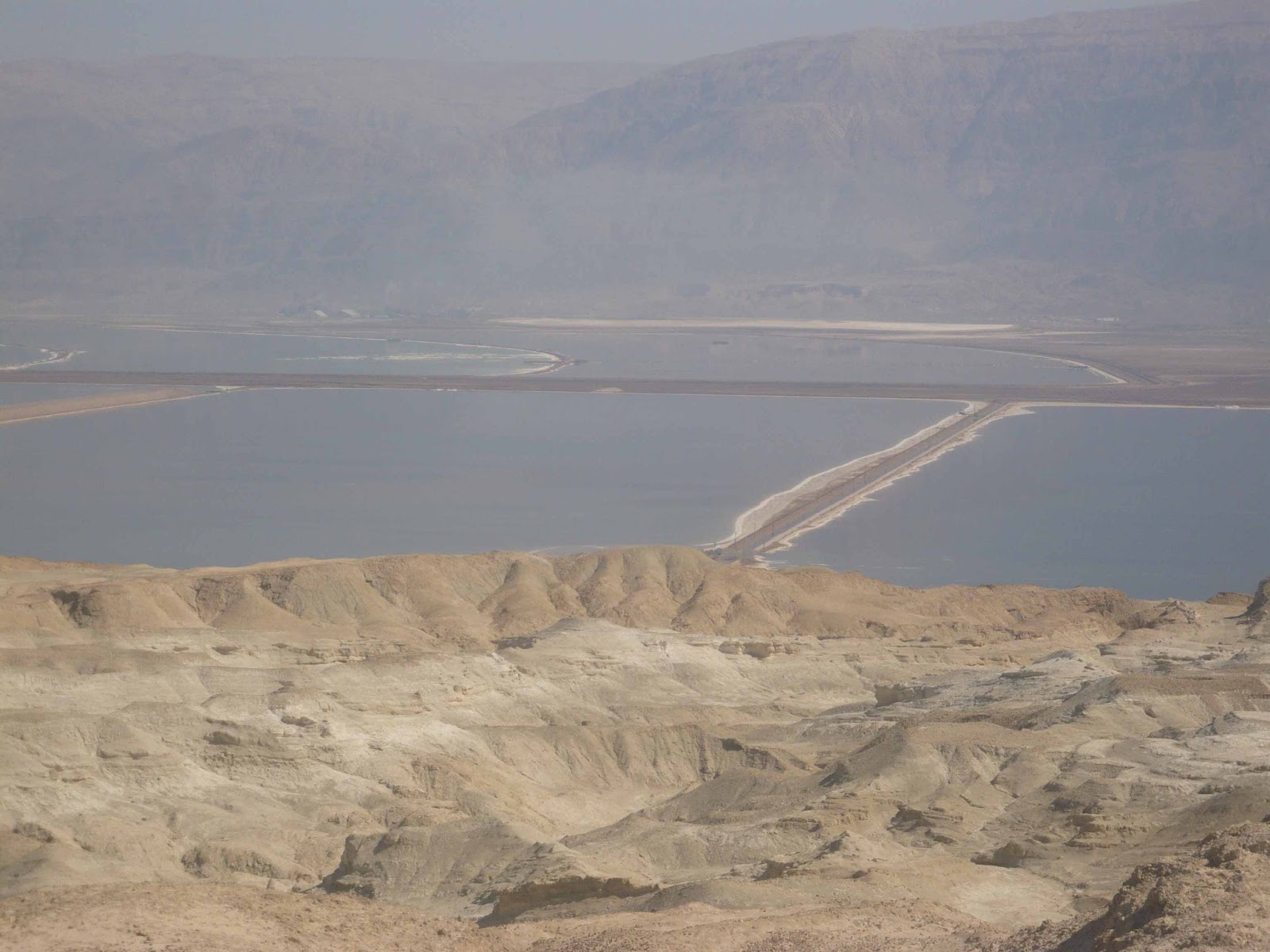
Sometimes miracles do happen and one happened to me at in the Judean Desert at the Dead Sea, the lowest – 400 meters below sea level, to be exact – and saltiest spot on the planet.


The Dead Sea


At 5.30am, I walked down to the sea to discover several people bobbing like bottles on the water. Having recently had foot surgery, my mission was to reap the water’s therapeutic benefits.

The Dead Sea air is reputed to have a relaxing effect as it contains extra oxygen and bromine as well as minerals renowned for helping people with psoriasis and ailments which include joint problems, so maybe it would do something for my feet. I hoped a dip in the sea would stop the spasmodic twinges of pain I was still getting.

As the water is extremely salty, most life forms cannot exist in it, the skin can easily become dehydrated, so it is advisable not to stay in the water too long. And don’t splash!  Get salt in your eyes and it will sting like crazy. The Dead Sea's low elevation means that it has weakened UV radiation, but you still have to take care in the sun, which is probably why so many people were up so early.

I slathered my legs and feet in mud and bathed them for a good 20 minutes. Legend has it that the Queen of Sheba and Cleopatra believed in the healing and rejuvenating properties of the Dead Sea’s mud and salts. And these two women were supposed to know a thing or two about beauty!


People bobbing like bottles on the Dead Sea


Before leaving, I managed to squeeze in a mud treatment at the Isrotel Dead Sea’s spa, the hotel where I was staying. My body was fully caked in mud, then wrapped in plastic, for what seemed an eternity. After eventually showering the stuff off, my therapist applied a lovely moisturising cream containing Dead Sea minerals. I have to say since that day I have not had one twinge. The magic of the Dead Sea? I’d like to think so.

After being pampered it was time to explore the area. Crossing a vista of stony mountains and steep canyons that surround the Dead Sea, I made my way to Masada, the remains of King Herod’s fortress, a place where history meets archaeology and tells a heart-wrenching story of bravery and martyrdom.

Thanks to the accounts of the Jewish historian, Flavius Josephus, from the first century and excavations from the early 1960s, the story of Masada lives on.

King Herod, needing a bolt-hole, had this three-tiered palace built. At the beginning of the great revolt against Rome in the year 68BC, it became the refuge of survivors of the Jewish revolt.

The governor of Judea, Flavius Silva was determined to end the uprising and laid siege to the fortress. A ramp was built and the soldiers managed to breach the wall with a battering ram. The 960 Jews, led by Eleazar Ben Yair, chose death over slavery. After killing their wives and children, the men then killed each other. The last man standing, allegedly, committed suicide.


Exploring Masada: the western edge of the great palace-fortress
Courtesy of  the Israeli Ministry of Tourism www.goisrael.com

My Israeli guide, Gadi Talmi, was like a walking encyclopaedia.  He told the story so beautifully that standing on the top of Masada looking down at the Roman military camps and the wild rugged, unspoilt scenery that engulfed it, you could almost feel these zealots’ presence.  

You can climb the renowned “snake path” to the top, but the cable car, which will whisk you there in minutes is preferable in hot weather. Load up on sunscreen and water before you go.

Once there you can see the remains of living spaces occupied by these Jews as well as a mikveh (Jewish ritual bath), storerooms, watchtowers, a synagogue  and mosaics thousands of years old. Particularly impressive is the water system which collected water from a day’s rainfall to keep a thousand people for over two years.

Whatever fate has in store for the Dead Sea, I’m sure that the fortress of Masada, the modern symbol of Jewish survival, will observe it all and be a wonder for generations to come.

By Daralyn Danns

Getting there

Contact the Israeli Government Tourist Office www.thinkisrael.com or call 0207 299 1100

El Al offers flights from London Luton to Tel Aviv from £399 or from London Heathrow to Tel Aviv from £426. To book call 0207 121 1400 or visit www.elal.uk or contact your travel agent

Isrotel Dead Sea (www.isrotel.co.uk)

Wednesday, 13 February 2013

Why do we celebrate Valentine’s Day?


Love is in the air, so they say. The celebration appears to date back to ancient Rome when 13, 14 and 15 February were celebrated as Lupercalia, a pagan fertility festival.

There are various legends of who St Valentine was and how Valentine’s Day came about. One story is that the Roman emperor Claudius ll executed Valentine, a priest on 14 February AD270 for marrying men and women when the emperor had strictly forbidden marriage. Claudius believed that single men were better soldiers than those with wives and families.  


Valentine, according to the story, while in prison fell in love with the jailer’s blind daughter whose sight he restored with the strength of his love. Shows what love can do! Before his execution, he, reputedly, sent her a note signed “From your Valentine”. It was circa AD496, that Pope Gelasius declared 14 February to be St Valentine’s Day.

Chaucer, in the 14th century, in his poem, “The Parliament of Fowls” written to celebrate the marriage of Richard ll and Anne of Bohemia wrote: “For this was on St Valentine’s Day/When every fowl cometh there to choose his mate.” It was this that is believed to be the first linking of romantic love with this date, although it is more likely to be referring to a date in May which honoured Valentine of Genoa. Apparently, it was King Henry Vlll in 1537 who declared 14 February an official holiday. I guess he knew a thing or two about love.

The oldest written Valentine dates back to the 1400s written by Charles, the Duke of Orleans to his wife while a prisoner in the Tower of London. By the middle of the 18th century, it was the custom to exchange handwritten notes of affection.

Over time the day evolved and is now is celebrated worldwide. Cupid and red hearts are traditional symbols of the occasion which has now been turned into a money spinner.

By Daralyn Danns

Friday, 8 February 2013

Champagne for Valentine’s Day


I prefer to keep Valentine’s Day special, yet simple. A glass of pink champagne is perfect for setting the mood for romance.

Champagne at a treehouse suite, Chewton Glen


If your loved one is worth spoiling then it has to be a good rosé champagne. Cava, prosecco  and crémants are all fizzes, but they are not champagne and don’t expect them to taste the same. Console yourself with the fact that cracking open a bottle of rosé champagne at home is cheaper than splashing out on a couple of glasses in a restaurant.

There are two ways of producing this seductive drink. One is to add a small amount of red wine to the white wine, the other is, after pressing, leaving the skins of the black grapes to impart a small amount of colour into the juice of the white grapes.

Not with a partner? I love how the Mexicans celebrate this day known as El Dia del Amor y la Amistad (the day of love and friendship). It is not just for lovers, but it is also the day to show people how much you appreciate them. A good enough reason to crack open a bottle of good bubbly.

Here are the top choices:


Billecart-Salmon, Brut Rosé, £60, bbr.com
Oscar Malek, head sommelier at the luxurious hotel and spa, Chewton Glen, at the edge of the New Forest, recommends Billecart-Salmon for its elegant and refined style. Bursting with tangs of raspberry, this is one of the most consistent and delicious rosés on the market.

(Until 14 Feb buy a bottle of Brut Rosé, Blanc de Blancs Grand Cru or Vintage 2004  and receive a complimentary half bottle of Brut Rosé, at selected retailers only. (For more info visit champagne-billecart.fr) 


Gosset Grand Rosé, £64.99, Selfridges
Another revered champagne and one that Oscar rates highly. The colour of crushed coppery-pink rose petals and packed with strawberry flavours, this rich full-bodied champagne seduces you with every mouthful you savour. Lingers long on the palate. Divine!


Ruinart Rosé, £54, bbr.com
Also recommended by Oscar is this gem from Ruinart, the oldest champagne house, founded in 1729. Made with a high proportion of chardonnay, it is an intense elegant fruity wine with just the right amount of freshness. Renowned as one of the best rosé champagnes, this silky smooth wine deserves its reputation; it is exquisite!


Champagne R&L Legras Rosé, £39.99, bbr.com
The champagnes from this house are found on several listings of the Michelin restaurants of Paris. Predominately chardonnay with a touch of pinot noir, this is a lovely zesty rosé bursting with fruit. A gorgeously constructed wine. 

By Daralyn Danns

Friday, 1 February 2013

Pairing wine with chocolate


When you think of Valentine’s Day, it is hard not to think of chocolate. Like wine, good chocolate is a pleasure worth savouring. If you don’t want to make a dessert, head for La Maison du Chocolat. This world-renowned French company produces goodies that are guaranteed to set your taste buds alight. 


The wine room at Chewton Glen

Oscar Malek, head sommelier at Chewton Glen, one of the UK’s top-notch country house hotels, recommends pairing something red and sweet with chocolate such as a fortified sweet wine from Banyuls. Grenache-based, it goes well with dark chocolate. Solera Banyuls Hors Age, Domaine Madeloc, Pierre Gaillard, (half litre, £36.60, bbr.com) is a wonderful complex wine from the South of France. Think toffee, caramel, walnuts and dates.
Maury also produces some delicious sweet red wines. Made from at least 75 per cent grenache noir, these are full-bodied sweet reds that pack a punch. Waitrose Seriously Plummy Grande Réserve Maury NV (£10.99, Waitrose) is an intensely plumy wine that works well with rich chocolate desserts.

La Maison du Chocolat

Also Oscar suggests checking out some of the sparkling reds. Brown Brothers Cienna Rosso (£9.99, Waitrose) is an unusual red fizz bursting with berry flavours. It is low in alcohol (7.5 per cent), so is light and refreshing.
Sparkling wines are made all over the world, but they are not champagne. Only the ones produced in the Champagne region of France are the real thing.
Crémant, from regions in France such as Alsace and Limoux, is also made by using the traditional method – that is the bubbles are produced by a second fermentation that takes place once the wine is in the bottle. An alternative to pink champagne is Blason de Bourgogne Brut Rosé NV Crémant de Bourgogne, (£12.99, Waitrose). Bursting with raspberry flavours, it tantalises the taste buds.
If you are worried about hangovers, Oscar says you should look for wines that are low in alcohol. “The more the wine is fermented, it tends to contain more alcohol and more sulphur,” he says.
By Daralyn Danns